

Headache is one of the most common health problems in the population. Headaches can arise from different causes and can significantly affect daily life and working life.
The most common types of headache include migraine, tension-type headache and headache originating from the neck (cervicogenic headache).
Migraine
Migraine is a type of headache that is usually felt on one side of the head, has a throbbing character and occurs in attacks. It may be accompanied by nausea, vomiting and sensitivity to light and sound. Some patients experience visual or sensory symptoms (aura) before the pain.
Tension-Type Headache
This is one of the most common types of headache. It is usually felt on both sides of the head as a tightening or pressing sensation. Tenderness in the neck, nape and shoulder muscles may accompany the pain.
Factors such as stress, irregular sleep and working in the same position for long periods can worsen the symptoms.
Cervicogenic Headache (Headache Originating from the Neck)
This is headache arising from the neck vertebrae, particularly the upper cervical joints, muscles and other anatomical structures.
The pain usually starts at the back of the neck and may spread to the back of the head, the temples, the forehead or around the eyes. It is mostly one-sided and may worsen with neck movements. Limited neck movement and tenderness in the neck muscles may accompany it.
Distinguishing cervicogenic headache from migraine and tension-type headache is important for choosing the appropriate treatment.
Diagnosis of Headaches
Diagnosis involves a detailed assessment of the location, duration, frequency and character of the patient’s pain and any accompanying symptoms.
In cervicogenic headache in particular, neck movements, the upper cervical joints, the muscles and the areas through which the occipital nerves pass are examined.
When necessary, cervical MRI, brain MRI and other imaging methods may be used. In some patients, diagnostic nerve blocks may also be performed to identify the source of the pain.
Treatment of Headaches
Treatment is planned according to the type of headache and its underlying causes. Appropriate medication plays an important role, particularly in migraine and tension-type headache. Physical therapy and interventional procedures may also be used in some patients.
1. Physical Therapy
Physical therapy methods can help reduce pain, particularly in cervicogenic and tension-type headaches.
Craniocervical manual therapy includes techniques targeting the joints and soft tissues in the area where the head and neck meet. In suitable patients, joint mobilisation, soft tissue techniques and therapeutic massage may be used.
Exercises that strengthen the muscles around the neck and shoulders, posture training, stretching and relaxation techniques are also important parts of treatment.
Breathing exercises, muscle relaxation methods and maintaining a regular sleep pattern can be particularly helpful in stress-related headaches.
2. Interventional Physiatry
Interventional treatments targeting nerve and muscle structures can be used for some headaches, particularly chronic ones that have not responded sufficiently to other treatments.
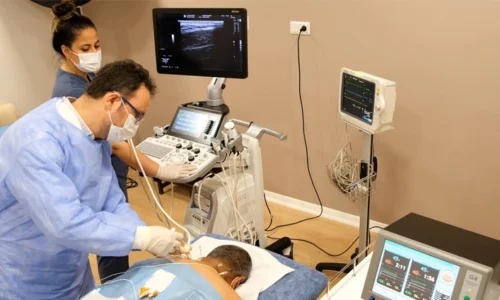
In ultrasound-guided targeted (Pinpoint) injections, the nerves and surrounding tissues associated with the pain are visualised with the aim of guiding the needle to the appropriate anatomical area.
Occipital Nerve Block
The greater and lesser occipital nerves play an important role in transmitting pain sensation from the back of the head.
In an occipital nerve block, a local anaesthetic and, where appropriate, a corticosteroid can be injected, particularly around the greater occipital nerve.
This method may be considered to reduce pain in cervicogenic headache, occipital neuralgia and in some migraine patients.
Ultrasound guidance helps to visualise the nerve and the blood vessels around it.
Occipital Nerve Pulsed Radiofrequency (PRF) Treatment
Pulsed radiofrequency (PRF) may be considered especially for long-standing, recurrent pain in the occipital region that has not responded sufficiently to other treatments.
In this procedure, a controlled electrical field is applied through a special needle placed near the occipital nerve with the aim of modulating pain transmission.
Unlike conventional radiofrequency, it is intended to be applied without causing significant heat damage to the nerve.
It is one of the interventional methods that can be used particularly in occipital neuralgia and in selected patients with cervicogenic headache.
Cervical Joint Blocks and Radiofrequency
In some types of cervicogenic headache, the source of the pain may be the small joints between the upper neck vertebrae.
In these patients, cervical facet joint injections, medial branch blocks or a third occipital nerve block can be performed under imaging guidance.
In suitable patients in whom diagnostic blocks support the source of the pain, radiofrequency treatment can be used to achieve longer-lasting pain control.
Trigger Point Injections and Dry Needling
Particularly in tension-type and muscle-related headaches, tender and painful points may be found in the muscles around the neck, nape, temples and shoulders.
Local anaesthetic injections or dry needling applied to these areas aim to reduce muscle-related pain.
Ultrasound guidance can be used when necessary. These methods may be considered as supportive treatment, particularly in patients with marked myofascial pain.
Subdermal Lidocaine Injections
In some patients, small amounts of local anaesthetic can be injected under the skin in superficial painful areas of the head and neck.
Subdermal lidocaine applications aim to temporarily reduce pain transmission originating from superficial nerve endings.
This approach may be considered as an adjunctive method in some selected painful conditions. However, it is not a standard treatment for migraine or tension-type headache.
Botulinum Toxin Injections
Botulinum toxin type A is one of the methods used in particular for the preventive treatment of chronic migraine.
Injections are given at predefined points into certain head and neck muscles with the aim of modulating the neural transmission mechanisms associated with pain and reducing the number of migraine days.
It may be considered especially for suitable patients who have headaches on 15 or more days a month, with migraine features on at least 8 of those days.
Botulinum toxin injections are not equally effective in every type of headache and are not recommended as a routine treatment for tension-type headache.
3. Surgical Treatment
Surgical treatment is not needed in the vast majority of migraine, tension-type and cervicogenic headaches.
However, surgical options may be considered when a specific structural disorder is causing the pain, when there is severe nerve compression, or in selected cases of resistant occipital neuralgia.
The treatment method is determined by the type of headache, the patient’s examination findings and the results of the necessary investigations.
Urgent medical evaluation is required for symptoms such as a sudden, very severe headache, new neurological deficits, fever and neck stiffness.