
What Is Nucleoplasty?
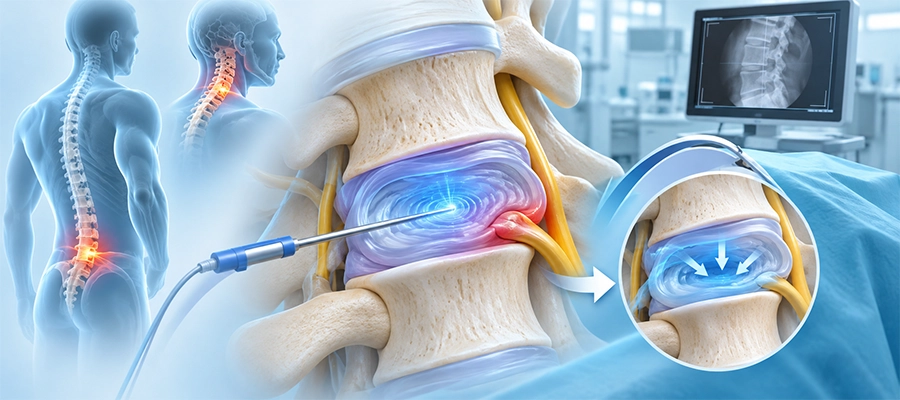
Nucleoplasty is a minimally invasive interventional treatment method used for lumbar and cervical disc herniations that does not require a surgical incision. Its primary purpose is to reduce the internal pressure of the herniated intervertebral disc, thereby relieving pressure on the nerves.
How Is Nucleoplasty Performed?
During the procedure, a special needle is inserted into the herniated disc under fluoroscopic (X-ray imaging) guidance. Different techniques may be used to reduce the pressure and volume inside the disc. These include intradiscal treatment methods using radiofrequency, laser, and ozone.
The procedure is performed under local anesthesia without pain. Patients are discharged on the same day.
Who Is a Candidate for Nucleoplasty?
Nucleoplasty is particularly suitable for patients with small or medium-sized lumbar or cervical disc herniations with an intact outer disc layer who have not experienced sufficient relief from medications, physical therapy, targeted epidural injections, or other non-surgical treatments. Eligibility for treatment is determined by evaluating the patient’s symptoms, physical examination findings, and MRI results together.
Who Is Not a Candidate for Nucleoplasty?
- Extruded or sequestered disc herniations: Nucleoplasty is generally not preferred, particularly when free disc fragments have separated from the disc.
- Patients who have previously undergone surgery at the same spinal level: Nucleoplasty is often unsuitable due to changes in disc structure and postoperative alterations.
- Patients with suspected or active infections should not undergo the procedure.
- Patients with bleeding disorders or uncontrolled bleeding risks should not undergo the procedure.
- Patients with severe nerve or spinal cord compression or progressive muscle weakness: The need for surgical treatment should be evaluated first.
- Patients with severe disc height loss, significant spinal stenosis, or spinal instability are generally not suitable candidates.
Can Nucleoplasty Treat Every Herniated Disc?
No. Nucleoplasty is not suitable for every lumbar or cervical disc herniation and does not provide the same results for every patient. Potential risks following the procedure include infection, bleeding, nerve injury, or persistent symptoms.