

What Is Radiofrequency (RF)?
Radiofrequency is one of the many methods used in pain treatment. Classic radiofrequency has been applied worldwide for about 40 years. The first radiofrequency generator was invented by Cosman in the early 1950s. Its use in treatment began in 1974. Pulsed radiofrequency, developed in recent years, has reduced the side effects of classic radiofrequency and thus offered the possibility of safer application.
What Are the Types of Radiofrequency Treatment?
Radiofrequency, known among the public as ‘nerve burning treatment’, is applied in two ways. In the classic or conventional application, a continuous current is given. This is called continuous RF (CRF). The technique developed in recent years is to give the current intermittently. This is called pulsed RF (PRF). The advantage of pulsed radiofrequency is that it causes far fewer side effects. The nerve, vessel and tissue burns seen in the conventional application are almost never seen in the pulsed application.
How does RF work?
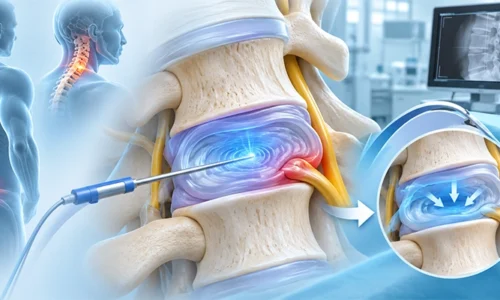
Continuous radiofrequency (CRF) is a high-frequency alternating current that causes a type of tissue damage in the targeted area. Tissue damage is created at 60-80 degrees. In pulsed radiofrequency (PRF) treatment, the current is applied intermittently so as to generate a lower temperature, around 42 degrees. Unlike the continuous application, no heat lesion forms in the nerve tissue in the pulsed application. The effect of pulsed radiofrequency stems from its modulating property on the nerves in the area where it is applied. This usually provides long-lasting or permanent pain relief. Today, PRF, i.e. pulsed RF, is used to a large extent in pain treatment.
Which diseases is Pulsed Radiofrequency (PRF) used to treat?
– Osteoarthritis of the lower back and neck joints, facet joint pain
– Lumbar and cervical disc herniations
– Trigeminal neuralgia
– Pain due to the nerves of the genital region
– Sacroiliac joint pathologies
– Shoulder pain, frozen shoulder
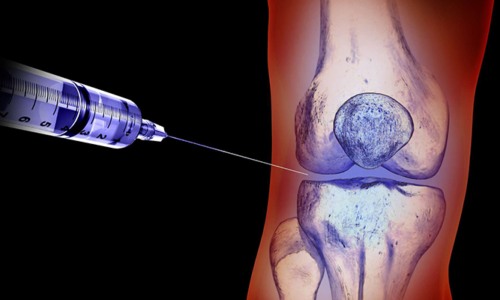
– Knee pain, severe knee osteoarthritis