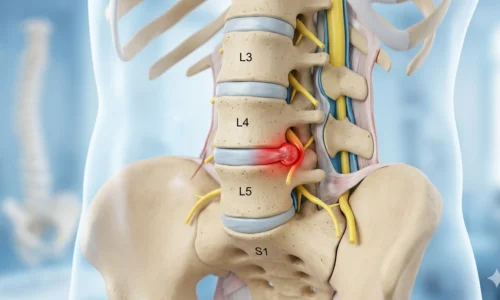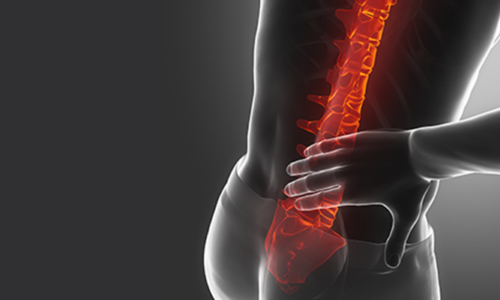


The hip joint is one of the large joints that carry the body’s weight and plays an important role in our daily movements. The most common causes of hip pain include hip osteoarthritis (coxarthrosis), cartilage damage, labral tears, femoroacetabular impingement and avascular necrosis of the femoral head.
Pain originating from the hip joint is usually felt in the groin. It may spread to the front of the thigh, the buttock and sometimes down to the knee. It may worsen particularly with movements such as walking, climbing stairs, squatting or putting on shoes. In advanced cases, limited joint movement and limping may occur.
Diagnosis of Hip Pain
Diagnosis begins with an assessment of the patient’s symptoms and physical examination findings. The range of motion of the hip joint, muscle strength and the movements that provoke pain are examined.
X-rays are used particularly to assess osteoarthritis and changes in bone structure. When necessary, MRI can be used to investigate cartilage, labrum and bone marrow problems. Ultrasonography helps in assessing the soft tissues around the joint and the joint fluid.
Treatment of Hip Pain
Treatment is planned according to the source of the pain and the degree of joint damage. In suitable patients, medication, exercise, physical therapy and interventional procedures aim to reduce pain and preserve mobility.
1. Physical Therapy
The main aim of physical therapy in hip joint problems is to reduce pain, preserve joint movement and strengthen the surrounding muscles.
Exercises targeting the hip and thigh muscles, manual therapy in suitable patients and various physical modalities may be used. Weight control, adjusting walking habits and, when necessary, using walking aids such as a cane are also important parts of treatment.
2. Interventional Physiatry
Ultrasound- and fluoroscopy-guided injections may be considered for hip joint pain, particularly in patients who have not benefited enough from medication and physical therapy.
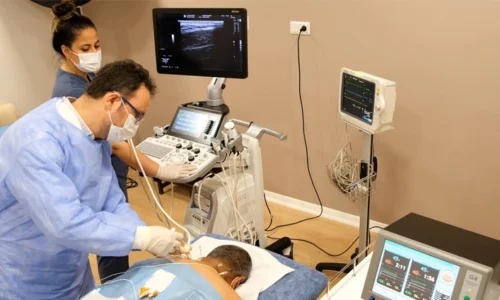
Ultrasound-Guided Intra-Articular Hip Injections
The hip is one of the body’s deeply located joints. Performing injections under imaging guidance therefore helps place the needle correctly inside the joint.
In ultrasound-guided targeted (Pinpoint) injections, the joint and the surrounding neurovascular structures are visualised and the medication can be delivered directly into the joint space.
Different substances may be used depending on the characteristics of the condition:
- Corticosteroid injections: These can be used, particularly in hip osteoarthritis, to reduce pain in the short term and improve joint function.
- Hyaluronic acid injections: Used to support joint lubrication, this method has not been adequately shown to be effective in hip osteoarthritis, and current guidelines do not recommend its routine use.
- Regenerative applications – PRP (platelet-rich plasma): Platelet-rich plasma prepared from the patient’s own blood is injected into the joint. Exosomes, stem cell applications derived from fat and bone marrow, and ozone injections can also be performed. The level of evidence for these treatments is still insufficient, and decisions should be made together with clinical and imaging findings.
Radiofrequency Treatment for the Hip Joint
Radiofrequency treatment may be considered for some patients, especially those with advanced hip osteoarthritis who are not suitable candidates for surgery or who wish to postpone it.
This method targets the sensory branches of the femoral and obturator nerves that supply the hip joint and carry its pain sensation.
In this procedure, performed under ultrasound and/or fluoroscopic guidance, radiofrequency energy is used to reduce pain transmission.
Radiofrequency treatment does not reverse osteoarthritis in the joint. However, it can help control pain in suitable patients. Scientific studies on its long-term effectiveness are ongoing.
3. Surgical Treatment
Surgery may be necessary for patients with advanced hip osteoarthritis, serious joint damage, or pain and limited movement that persist despite other treatments.
Depending on the problem in the hip joint, operations such as hip arthroscopy, osteotomy or total hip replacement may be performed. Total hip replacement is an important treatment option, particularly in advanced osteoarthritis.
The treatment method is determined according to the patient’s age, symptoms, physical examination findings and imaging results.