
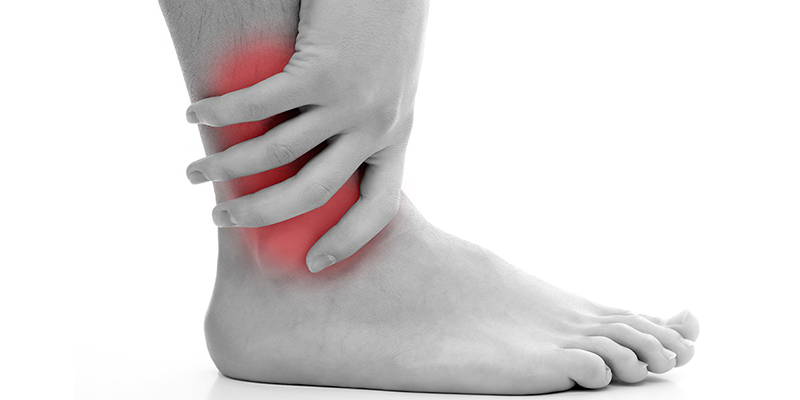
Foot and ankle pain is one of the most common musculoskeletal problems and can affect walking, standing and daily life.
The most common causes include heel spurs and plantar fasciitis, Achilles tendon disorders, ankle ligament injuries, osteoarthritis, tendon inflammation, nerve entrapments (tarsal tunnel syndrome, Morton’s neuroma), bunions (hallux valgus) and stress fractures.
Heel pain that appears with the first steps in the morning suggests plantar fasciitis, while ankle pain that worsens with walking may originate from joint or tendon problems. Burning, numbness and electric-shock sensations in the foot may be signs of nerve entrapment.
Diagnosis of Foot Pain
Diagnosis begins with an assessment of the location and duration of the pain, its relationship with walking, and the physical examination findings.
Musculoskeletal ultrasonography is an important method for diagnosing foot and ankle disorders. The plantar fascia, Achilles tendon, other tendons, ligaments, joint fluid and some nerve entrapments can be assessed with ultrasonography.
When necessary, X-rays, MRI and electromyography (EMG) to investigate nerve entrapments may be used.
Treatment of Foot Pain
Treatment is planned according to the source of the pain and the characteristics of the condition. The main options are appropriate medication, activity modification, insoles and orthoses, physical therapy and image-guided interventional procedures.
1. Physical Therapy
The aim of physical therapy in foot and ankle pain is to reduce pain, improve flexibility, strengthen the muscles and improve walking function.
Depending on the patient’s condition, stretching and strengthening exercises, manual therapy, balance training, electrotherapy and other physical modalities may be used.
In chronic plantar fasciitis and some tendon disorders in particular, ESWT (shock wave therapy) is one of the physical treatment options that can be effective. High-intensity laser therapy (HILT) may also be considered for pain control in some patients.
Choosing suitable footwear, custom insoles, heel cushions and weight control are also important parts of treatment.
2. Interventional Physiatry
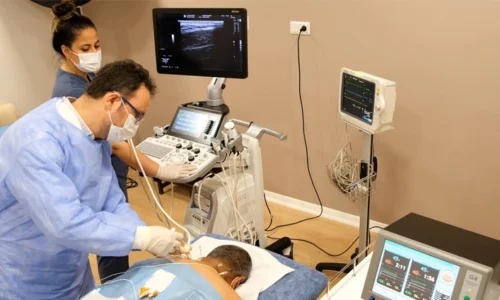
Ultrasound-guided targeted injections play an important role in foot and ankle disorders.
In ultrasound-guided “Pinpoint” procedures, the tendon, ligament, joint, plantar fascia or nerve structures causing the pain are visualised directly so that the needle can be guided to the target area.
This makes it easier to deliver the injection to the correct anatomical site and helps protect the surrounding blood vessels, nerves and tendons.
Injections for Heel Pain and Plantar Fasciitis
Plantar fasciitis is a painful condition associated with overloading and structural changes of the plantar fascia, which runs along the sole of the foot from the heel bone.
It typically presents with severe heel pain during the first steps after getting out of bed in the morning.
The thickness and structure of the plantar fascia and the surrounding tissues are assessed with ultrasonography, and in suitable patients corticosteroid, PRP or other targeted injections may be administered.
In resistant cases of heel spur, the aim is to treat the condition by ablating the heel nerves with radiofrequency neuroablation.
Corticosteroid injections can be used for short-term pain control, while PRP aims to support the tissue’s natural healing processes. Possible risks such as rupture of the plantar fascia and damage to the heel fat pad are taken into account when injecting.
Injections for Achilles Tendon and Other Tendon Disorders
Strain, degeneration, inflammatory changes and partial tears can occur in the Achilles tendon and the other tendons around the ankle.
In these conditions, ultrasonography allows the structure of the tendon and the damaged area to be assessed.
In suitable patients, PRP, injections around the tendon and certain special fluid injection (hydrodissection) techniques may be used.
The aim of these procedures is to reduce pain and support tissue healing. However, controlled loading and exercise programmes are among the main treatments for tendon disorders. Corticosteroid injection into the Achilles tendon is avoided in particular because of the risk of tendon damage and rupture.
Intra-Articular Ankle Injections
In ankle osteoarthritis, cartilage damage and some inflammatory joint diseases, ultrasound-guided intra-articular injections may be performed.
Corticosteroid injections can be used to reduce the inflammatory reaction and pain inside the joint in the short term.
Hyaluronic acid and PRP are also being studied as intra-articular treatments. Hyaluronic acid aims to support the lubricating properties of the joint fluid, while PRP aims to regulate biological healing processes. However, the routine use of these two methods in ankle osteoarthritis is not supported by current scientific guidelines.
Ultrasound-Guided Injections for Nerve Entrapments
Entrapment of nerves at various anatomical sites in the foot and ankle can cause pain, burning, numbness and electric-shock sensations.
Tarsal tunnel syndrome is entrapment of the tibial nerve on the inner side of the ankle, while Morton’s neuroma is a condition usually associated with thickening and compression of the nerve between the toes.
In these conditions, ultrasound-guided injections of local anaesthetic and, in suitable patients, corticosteroid can be given around the nerve.
In hydrodissection, fluid is injected around the nerve to separate it from the surrounding tissues and reduce the mechanical pressure on it.
Other Targeted Injections
Ultrasound-guided local injections can also be used for bursitis around the ankle, tendon sheath inflammation and some ligament injuries.
Depending on the characteristics of the condition, options such as corticosteroid, local anaesthetic or PRP may be considered.
3. Surgical Treatment
Surgery is not needed in a large proportion of foot and ankle pain cases.
However, surgical treatment may be considered for severe tendon and ligament tears, advanced joint osteoarthritis, marked foot deformities, resistant nerve entrapments, or serious pain and loss of function that persist despite other treatments.
Depending on the type of condition, methods such as arthroscopic ankle surgery, tendon and ligament repair, nerve release surgery, osteotomy, joint fusion (arthrodesis) or ankle replacement may be used.
The choice of treatment is determined according to the patient’s symptoms, physical examination findings and imaging results.