
Tailbone pain is medically known as coccydynia. It is a painful condition originating from the tailbone (coccyx) at the very bottom of the spine and the tissues around it.
The most common causes include falling onto the buttocks, strain during childbirth, sitting on hard surfaces for long periods and repeated minor trauma. Sometimes excessive mobility or structural changes in the coccygeal joints can also cause pain. In some patients, no clear cause can be found.
It is more common in women and may appear particularly during pregnancy and after childbirth.
What Are the Symptoms of Tailbone Pain?
The most prominent symptom is tailbone pain that worsens especially when sitting. Patients usually report difficulty sitting on hard surfaces and increased pain when getting up from a seated position.
Some patients may also feel pain when bending forward or during bowel movements.
How Is Tailbone Pain Diagnosed?
Diagnosis begins with an assessment of the patient’s symptoms and physical examination findings.
The structure of the coccyx can be examined with X-rays. Especially in long-standing pain, comparative X-rays taken in sitting and standing positions can provide information about the mobility of the bone.
When necessary, MRI can be used to investigate fractures, infection, tumours or other problems related to the surrounding soft tissues.
Pilonidal sinus, local infections and other causes of pain that may be referred to the tailbone should also be evaluated.
How Is Tailbone Pain Treated?
The treatment of tailbone pain takes into account the cause of the condition, the duration and severity of the pain, and the patient’s response to previous treatments. Treatment options consist of physical therapy methods, interventional physiatry procedures and, when necessary, surgery.
1. Physical Therapy
Physical therapy can be used in tailbone pain to reduce pain and make the patient’s daily activities easier.
Scientific studies in recent years in particular show that ESWT (shock wave therapy) can reduce pain and contribute to functional improvement in chronic tailbone pain.
High-intensity laser therapy (HILT) is also among the methods used to reduce pain. Although there are studies reporting positive results, more research is needed on its long-term effectiveness.
In addition, depending on the patient’s condition, manual therapy, pelvic floor rehabilitation, stretching and exercise may be added to the treatment programme.
In daily life, avoiding prolonged sitting, using special cushions that reduce pressure on the tailbone and adjusting the sitting position can also help relieve symptoms.
2. Interventional Physiatry
Interventional treatments can be used, particularly for long-standing tailbone pain that has not improved sufficiently with methods such as physical therapy.
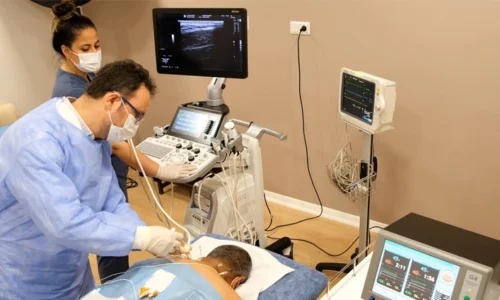
In these procedures, imaging methods such as ultrasonography or fluoroscopy are used to target the anatomical structures thought to be responsible for the pain.
Ganglion Impar Block
The ganglion impar is one of the nerve structures involved in transmitting pain in the tailbone region.
In a ganglion impar block, the target area is reached with a fine needle, usually under the guidance of a special X-ray device called fluoroscopy. Medication containing a local anaesthetic and, in suitable patients, a corticosteroid can be administered there.
Ultrasonography can also be used to assess the area before the procedure and in some injection techniques.
This treatment aims in particular to reduce chronic tailbone pain.
Radiofrequency Treatment
In radiofrequency treatment, controlled radiofrequency energy is applied to the nerve structures involved in transmitting pain in the tailbone region.
In this procedure, which can target the ganglion impar and other suitable nerve targets, the aim is to reduce the transmission of pain signals.
Conventional radiofrequency uses controlled heat energy, whereas pulsed radiofrequency aims to modulate pain transmission by the nerves without causing significant heat damage.
It is one of the interventional methods that may be considered especially for long-lasting pain that does not respond to other treatments.
Local Injections
In some patients, the source of the pain may be the joints, ligaments or soft tissues around the coccyx.
In such cases, local anaesthetic and corticosteroid injections may be given to the painful area.
The target of the injection is determined according to the patient’s examination findings, and ultrasound or fluoroscopic guidance can be used when necessary.
3. Surgical Treatment
Surgery may be considered for some patients whose pain is long-lasting, significantly affects daily life and has not responded sufficiently to other treatment methods.
In the operation called coccygectomy, part or all of the coccyx can be removed. However, because of risks such as infection and wound-healing problems, surgical treatment requires careful patient selection and is generally considered a last resort.
The most appropriate treatment for tailbone pain is determined by evaluating the patient’s symptoms, examination findings and the necessary imaging studies together.